Piano Trip - Magic Music Game
- 4.6
- Rating
- 10.00M
- Installs
- Free
- Price

 Analysis by App-foxy
I approached Piano Trip - Magic Music Game as a quick rhythm game rather than a substitute for learning piano, and that distinction matters. Its central appeal is simple: listen, watch the notes arrive, and tap in time. When the timing feels right, the game creates a surprisingly satisfying sense of control, especially during a short break when I want something musical without committing to a long session.
This is a free music game from Puzzle Games Star Studio, aimed at Everyone and available for devices running Android 6.0 or later. It has built a sizeable audience, with over five million installs and an average rating of 4.6 from around thirteen thousand ratings. Those figures suggest that the straightforward rhythm format connects with many players, but they do not replace the more useful question: does the tapping feel enjoyable enough for your own habits?
Why the rhythm-tapping idea works so well
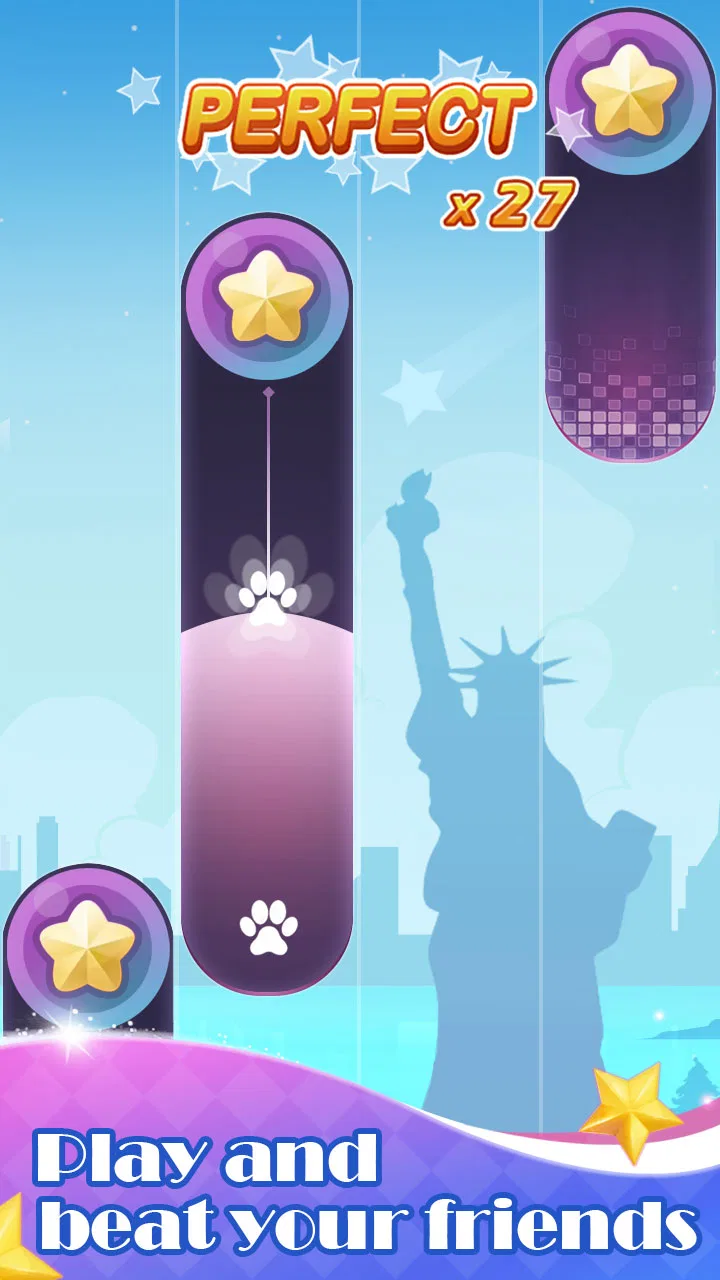
The strongest capability here is its ability to turn a familiar piano-style presentation into a focused timing challenge. I do not need to understand music theory, read sheet music, or know how to play an instrument. The game gives me a visual path to follow, and my job is to keep my attention on the beat. That makes the first few minutes easy to understand, while still leaving room for mistakes when the pace becomes demanding.
You May Also Like

 Blood Strike: 2.5 Anniversary
Blood Strike’s Loadouts Turn Every Drop Into a Tactical Gamble
A close look at Blood Strike’s custom loadouts: how fast access to signature weapons reshapes its battle royale rhythm, rewards preparation, and narrows the gap between fights.

 Pandora - Music & Podcasts
Pandora’s Music Is Easy to Start, but Harder to Recover
Pandora’s strength is its low-effort path from a seed to a station. Its weak spot is how much confidence it asks you to place in connection, setup, and quiet recovery.

 8 Ball Pool
 Is Built on Rivalries, Rematches, and Routine
A close look at the rivalries, rematches, shared routines, and unanswered safety questions that turn a quick pool match into a persistent mobile community.

 Samsung Music
’s Quiet Strength Is Playing What You Already Own
Its reach comes less from spectacle than from dependable access to a personal library. That simplicity is both the app’s strongest retention engine and its ceiling.

 AccuWeather: Weather Radar
AccuWeather Review: A Quick, Clear Forecast for Everyday Decisions
For everyday plans, the best forecast is the one you can understand quickly. AccuWeather makes rain timing, radar, and local conditions easy to act on, with a few trade-offs.

 Hill Climb Racing
Why Hill Climb Racing Still Turns Crashes Into One More Run
A tiny car, a bumpy hill and one more upgrade: Hill Climb Racing keeps resurfacing because its simple chaos makes every near-miss feel personal.
More From Our News Desk



What I like most is the immediate relationship between attention and result. If I tap too early, too late, or lose focus for a moment, the error feels connected to my action rather than hidden behind complicated controls. That clarity makes each attempt useful. I can usually tell whether I was distracted, rushing, or simply not prepared for a faster sequence.
The real strength is not piano simulation; it is the tight loop between hearing, seeing, and tapping. Players who enjoy rhythm games will recognize that structure, but the piano theme gives it a calmer and more approachable identity than a heavily arcade-styled music title. It works particularly well for people who want a musical game that can be understood almost immediately.
How a typical session feels
I usually start with the sound at a comfortable level and keep my attention on the moving notes rather than trying to anticipate too far ahead. The visual pattern gives me a short window to react, while the music helps establish a natural pace. When those two signals agree, tapping feels almost automatic. When they do not, I notice how quickly a small lapse can affect the rest of the attempt.
The controls are approachable because the interaction is concentrated on tapping. That simplicity is helpful on a phone, where complex gestures can feel awkward and where I may be playing with one hand. It also means the game does not spend much time teaching me a control scheme. I can understand the basic action quickly and focus on improving timing.
There is a trade-off in that design. A small control set leaves less room for strategic variety than a full piano-learning application or a larger rhythm game with several play styles. The enjoyment depends heavily on whether you like repeating a musical pattern to improve your accuracy. If you need exploration, story, or a collection of unrelated mechanics, this narrow focus may feel limited after the novelty fades.
Using it as a short daily break
The most convincing everyday use case is a short break between tasks. I can play for a few minutes while waiting for an appointment, taking a pause from work, or winding down before putting my phone away. The game does not require me to remember a complicated narrative or rebuild a large strategy from the previous session. I can simply return to the rhythm and see how steady my hands and attention feel that day.
For that kind of use, I recommend treating each attempt as a small concentration exercise instead of chasing endless progress. I first play at a relaxed pace, then make another attempt with the goal of reducing rushed taps. This approach makes the game feel less frustrating and gives me a clearer reason to replay a section. It also prevents the common mistake of tapping harder or faster when the real problem is timing.
Sound is important to this experience, so playing silently can reduce much of the appeal. If I am in a public place, I keep the volume low and rely more heavily on the visual movement, but that makes the timing feel less natural. The game remains playable as a visual challenge, yet the musical feedback is a meaningful part of why the interaction works.
Who will enjoy the focused format
I would recommend it to casual players who like music games, quick challenges, and simple controls. It is also a reasonable choice for someone who has never played a rhythm game and wants an uncomplicated starting point. The Everyone age rating makes it suitable for a broad audience, although younger players may still benefit from sensible screen-time limits because repeated attempts can encourage “just one more try” behavior.
It can also suit people who enjoy piano imagery but do not want the pressure of a serious practice tool. Tapping along to a game is a different activity from learning finger placement, scales, or expressive technique. I would not install this expecting structured lessons or a path toward playing real piano. Its value is entertainment and concentration, not formal musical education.
Players who prefer richer progression systems should think carefully before choosing it. If your ideal music game includes deep customization, competitive rankings, a story campaign, or many instruments, this focused piano format may not provide enough variety. A dedicated rhythm title with broader modes would probably be a better long-term match for that preference.
Small habits that make the timing easier
One useful habit is to watch the center of the play area rather than staring at the next individual note. Looking too narrowly can make me react late to the pattern that follows. By keeping a wider view, I can recognize the upcoming movement and use the music to confirm the timing instead of relying on eyesight alone.
Another practical tip is to avoid changing my tapping style halfway through a difficult sequence. When I become tense, I tend to use heavier taps or shift the phone in my hand. That creates unnecessary movement and makes the next input less consistent. A lighter, steadier touch usually gives me more control, particularly when I am playing one-handed.
I also find it better to pause after several poor attempts rather than immediately repeating the same mistake. A short break can reset my attention. Returning with a slower, more deliberate rhythm is often more effective than trying to compensate by tapping aggressively. This is a small point, but it changes the experience from random retries into a manageable practice routine.
Where the game may lose your attention
The main limitation is repetition. The same core action that makes the game accessible can also make it feel narrow. Once I understand the tapping loop, continued enjoyment depends on the appeal of the musical sequences and my personal interest in improving timing. Someone looking for constant surprises may find the experience predictable.
Difficulty can also feel personal rather than purely technical. A player with good visual reaction but little rhythm confidence may progress differently from someone who naturally follows a beat. When a run goes badly, it is tempting to blame the speed, but the more useful response is to identify whether the problem came from watching too far ahead, ignoring the audio cue, or losing a stable hand position.
The free price lowers the barrier to trying it, which is a clear advantage for casual users. At the same time, free mobile games can encourage players to return frequently, and that may not suit someone who wants a single, uninterrupted musical experience. I would approach it as a convenient pick-up-and-play title rather than as a replacement for a premium rhythm game designed around a larger, more curated package.
How it compares with other music games
Compared with a piano-learning app, this game is much easier to enter but far less educational. It does not ask me to build a technical foundation or practice a real instrument. That makes it better for immediate entertainment and worse for anyone whose main goal is measurable musical progress.
Compared with a broader rhythm game, its piano presentation feels more focused and less cluttered. That can be a benefit when I want a clean, direct challenge. The compromise is that players who enjoy multiple genres, elaborate stages, or several control systems may find a larger rhythm game more rewarding over time.
Compared with simply listening to music, the game offers active involvement. I am not just consuming a track; I am trying to stay synchronized with it. That extra participation is exactly why it can hold my attention during a short break, although it also means the experience can become tiring when I am not in the mood to concentrate.
Device details and practical expectations
The current version is 1.5.8, and the game was released on October 12, 2021. It is free to download and supports Android 6.0 and newer, so it is accessible to owners of many older Android devices as well as recent phones. I would still keep expectations realistic on an older handset: rhythm games benefit from responsive touch input, and any device-level delay can make accurate tapping feel less comfortable.
Because timing is the heart of the experience, I would test the game in the same setup I plan to use regularly. If I normally play with headphones, I would judge the rhythm there rather than switching constantly between speakers and headphones. Likewise, holding the phone securely and avoiding a crowded multitasking session can make the controls feel more dependable.
The store summary presents it as a way to follow the rhythm, tap the beat, and become a piano master in a modern piano game. I read that as an invitation to enjoy the fantasy of piano performance, not as a promise of real-world instruction. That expectation keeps the game in the right category: a music-themed reflex challenge with a piano flavor.
My recommendation for different kinds of players
If you want a free game that can fill a few spare minutes with music and simple tapping, I think it is worth trying. Its low entry barrier is its biggest practical advantage. You can understand the central action quickly, and the feedback makes it clear why an attempt succeeded or failed.
If you are buying a game mainly for long-term variety, I would be more cautious. The focused format may be ideal for a player who enjoys refinement, but it will not satisfy everyone who expects a large collection of mechanics. In that case, I would choose a broader music game and keep this one as a lightweight alternative for short sessions.
Puzzle Games Star Studio has built the experience around one clear idea rather than overwhelming the player with systems. In my experience, that focus is both the reason to install it and the reason to know your own preferences first. I enjoy it most when I want a quick test of timing, not when I want a complete musical hobby.
Overall, Piano Trip - Magic Music Game is a pleasant pick for casual rhythm fans, beginners, and anyone who likes the feeling of matching taps to a beat. Its best moments come from the simple connection between the moving notes, the music, and my own concentration. I would recommend it with one honest condition: choose it for focused, repeatable piano-style gameplay, and skip it if you need deep lessons, a story, or constant mechanical variety.
FAQs for Piano Trip - Magic Music Game
01What is Piano Trip - Magic Music Game about?
Piano Trip - Magic Music Game is an engaging rhythm game where players tap on tiles to play popular and classical piano tunes. It combines elements of music and gaming, providing an immersive experience for music lovers and gamers alike. The app offers various levels of difficulty, making it accessible for beginners and challenging for seasoned players.
02Is Piano Trip - Magic Music Game free to play?
Yes, Piano Trip - Magic Music Game is free to download and play. However, it includes in-app purchases that offer additional features, songs, and levels. These purchases are optional, and players can still enjoy a substantial amount of content without spending money. Be sure to check the in-app purchase options if you wish to enhance your gameplay experience.
03What type of music is available in Piano Trip - Magic Music Game?
The game features a wide range of music genres, including classical, pop, and original compositions. Players can enjoy famous pieces from composers like Beethoven and Mozart, as well as contemporary pop hits. The diverse music library is regularly updated, providing fresh content to keep players engaged over time.
04Can I play Piano Trip - Magic Music Game offline?
Yes, Piano Trip - Magic Music Game offers offline gameplay, allowing players to enjoy the game without an internet connection. This feature is particularly useful for playing on the go or in areas with limited connectivity. However, some features, such as leaderboard updates and downloading new songs, may require an internet connection.
05How does the difficulty level work in Piano Trip - Magic Music Game?
The game offers multiple difficulty levels ranging from easy to expert. Beginners can start with simpler tunes to get accustomed to the gameplay mechanics, while more experienced players can opt for challenging tracks that test their speed and accuracy. As players progress, the difficulty increases, providing a rewarding and challenging experience.
Pros
- Engaging and responsive gameplay experience.
- Vast library of popular songs to play.
- Intuitive controls suitable for all ages.
- Visually appealing graphics and animations.
- Regular updates with new content.
Cons
- Contains in-app purchases for premium content.
- Ads can interrupt gameplay experience.
- Requires internet connection for some features.
- Limited offline song availability.
- May drain battery quickly on older devices.

Piano Trip - Magic Music Game
Gallery